Tokens and addresses
Two pieces of reference data sit under every token card, and they are separate on purpose.
A token is the asset itself: its name, symbol, logo, whether it is a stablecoin, and where its price comes from. A token address is where that token lives on one specific chain: the contract address and its decimals.
USDC is one token with many addresses: one on Ethereum, one on Polygon, one on Arbitrum. Same asset, same price, different contracts.
Why the split matters
A token card needs the token and an address for the account's chain. A token that exists with no address on your chain still cannot be tracked there, which is the most common reason a card cannot be created.
Browsing tokens
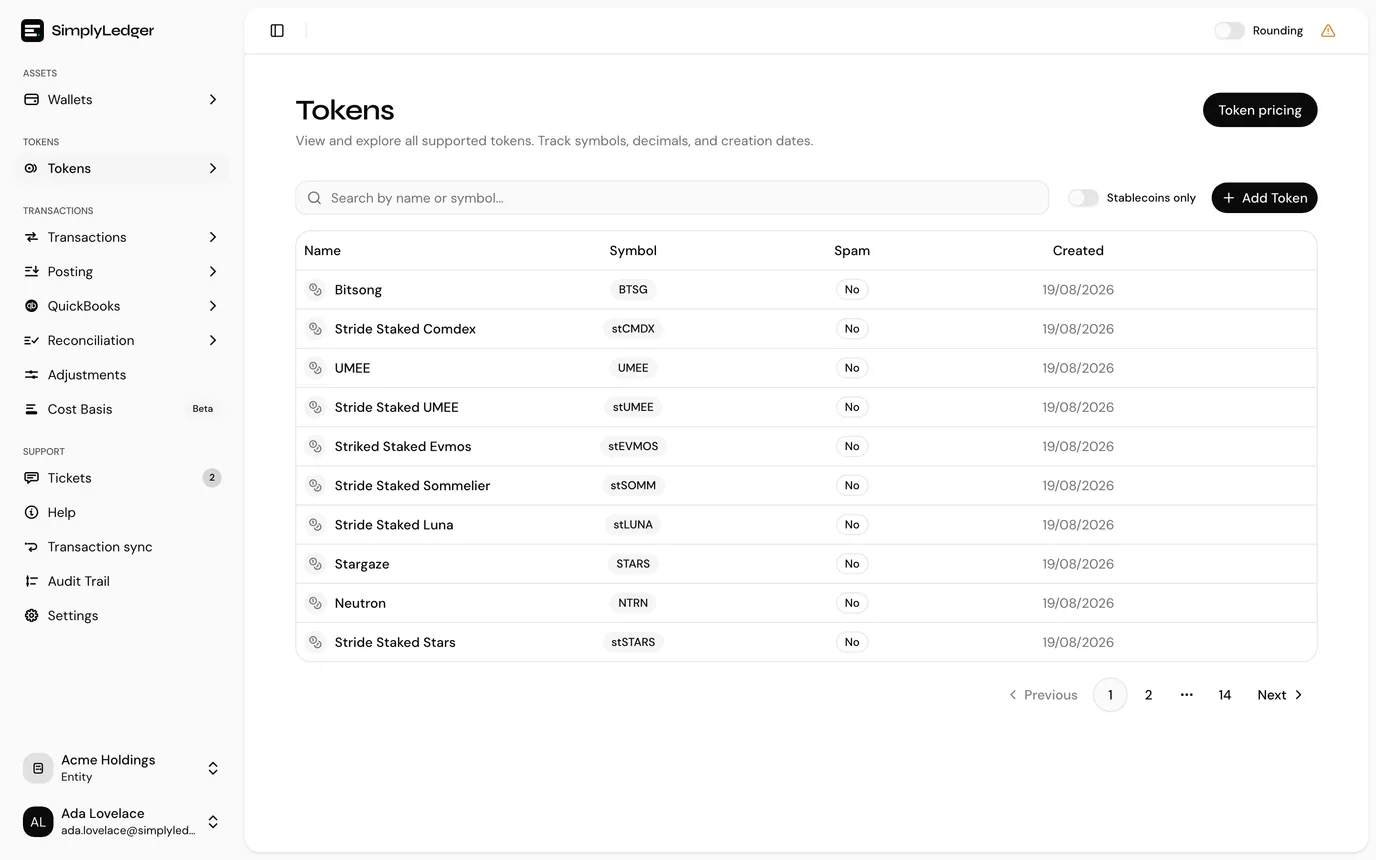
Select Supported Tokens near the bottom of the sidebar's icon rail, then Tokens. It lists every token SimplyLedger carries, not only the ones this entity holds. Opening one shows:
- a header with its name, symbol and stablecoin badge, its Price source and its Source ID at that source. A CoinGecko source links out to the token's CoinGecko page. A token whose prices are not supported says so here instead.
- Token Addresses: one row per chain, with the chain's logo, the address (copyable, and linked to the chain's block explorer; Native for a chain's own coin), its exponent, whether it is active or archived, and when it was added. Add Address raises a request for a chain that is missing.
- any pending requests for new addresses on that token.
Price history is under token prices.
Related pages, covered in spam, requests and fiat and the pricing guides:
| Page | Where | What it is for |
|---|---|---|
| Token Pricing | Supported Tokens | Stored prices per token and date. See token prices. |
| Fiat Tokens | Supported Tokens | The supported fiat currencies, used by fiat token cards on exchange and fiat accounts. |
| Fiat Pricing | Supported Tokens | Stored FX rates. See fiat prices. |
| Spam Tokens | Settings → Token Management | Tokens marked as spam and excluded from reports. Removing one from spam brings it back into normal handling. |
| Token Requests | Settings → Token Management | Requests for new tokens, waiting to be reviewed. |
| Token Address Requests | Settings → Token Management | Requests for new addresses on existing tokens, waiting to be reviewed. |
Native and contract addresses
An address is one of two types:
- Native: the chain's own coin: ETH on Ethereum, MATIC on Polygon. There is no contract, so the address is recorded as
NATIVEand displayed as Native. - Contract: everything else. The token's contract address on that chain.
Each address also carries an exponent, the token's decimals. It is what converts a raw on-chain amount into a human one, so a wrong exponent produces amounts that are wrong by orders of magnitude rather than slightly off. The address form has a Get decimals action that reads the value from the chain; use it rather than typing the number.
When something is missing
Gaps in this reference data surface on the posting overview, because that is where they stop work. An account lists them in the order they have to be fixed:
| Flagged as | Meaning |
|---|---|
| Missing tokens | A transaction references a token SimplyLedger does not carry at all. |
| Missing token addresses | The token exists, but has no address on this chain. |
| Missing token cards | Token and address both exist; the account just has no card. |
Each is resolved from that page, and the posting overview covers the actions on offer.
Most airdropped junk is genuinely spam. Marking it so keeps it out of the posting queue and out of reports, and it stays reversible from Settings → Token Management → Spam Tokens.
Requesting a token or an address
Submitting a token or an address SimplyLedger does not already carry raises a request. Requests are listed under Settings → Token Management: new tokens on Token Requests, new addresses on Token Address Requests. Either is usable once approved.
What each request needs:
| Field | Notes |
|---|---|
| Token name and symbol | The full name and its ticker, for example Ethereum and ETH. |
| Price source | Where prices are fetched from. See token prices. |
| Source token ID | The token's identifier at that price source (ethereum for CoinGecko, not the symbol). Getting this wrong is what leaves a token with no prices. |
| Stablecoin | Tick when the token is pegged to a fiat currency. |
| Chain, address, exponent | For an address request: the chain, the contract address, and its decimals. |
Who can submit
Creating tokens and addresses needs write access to the entity. Viewers see the lists but not the actions. See roles and permissions.
Next
Token prices covers where the values shown against your balances and transactions come from, and how to fill a gap.